[email protected]
Diagnostic
Heart, Lung, and Blood (NHLBI)
CA - 47
University of California Center for Accelerated Innovation (UC CAI)
 About a decade ago, biomedical engineer Elliot Botvinick was listening to a presentation on how to prevent soldier’s deaths. The speaker highlighted that vital sign monitors for wounded soldiers often don’t alert medics to a serious situation until it’s too late. The level of lactate in the blood, the speaker described, is a good predictor of whether a person’s health will quickly decline, but a simple way to continuously monitor it hadn’t been invented. Botvinick decided to take up the challenge.
Over the next ten years, Botvinick and his team developed a simple device that continuously monitors lactate. “We're basically implanting the hospital laboratory under your skin,” says Botvinick, which he explains is a small, flexible sensor inserted under the skin and tracks lactate concentration in the blood. The data is then sent to a smartphone where it can be continuously monitored.
To fund the device development and testing required to bring it to the patients—activities typically outside the scope of traditional NIH research grants—the team applied for a University of California Center for Accelerated Innovation (UC CAI) proof-of-concept grant, funded through the NIH Center for Accelerated Innovations (NCAI) program. Botvinick, who is now a mentor and advocate for the program, says the funding was instrumental in moving the project forward.
We are going to allow for the kind of automated blood sugar control that has never been achieved before.
Aside from funding the development of the lactate monitor, the grant allowed the team to hire a regulatory consultant, conduct market research, and establish a sterilization technique for inserting the device. The grant also funded their first human exercise study in 2016, which Botvinick says led to interactions with venture capitalists.
We are going to allow for the kind of automated blood sugar control that has never been achieved before.
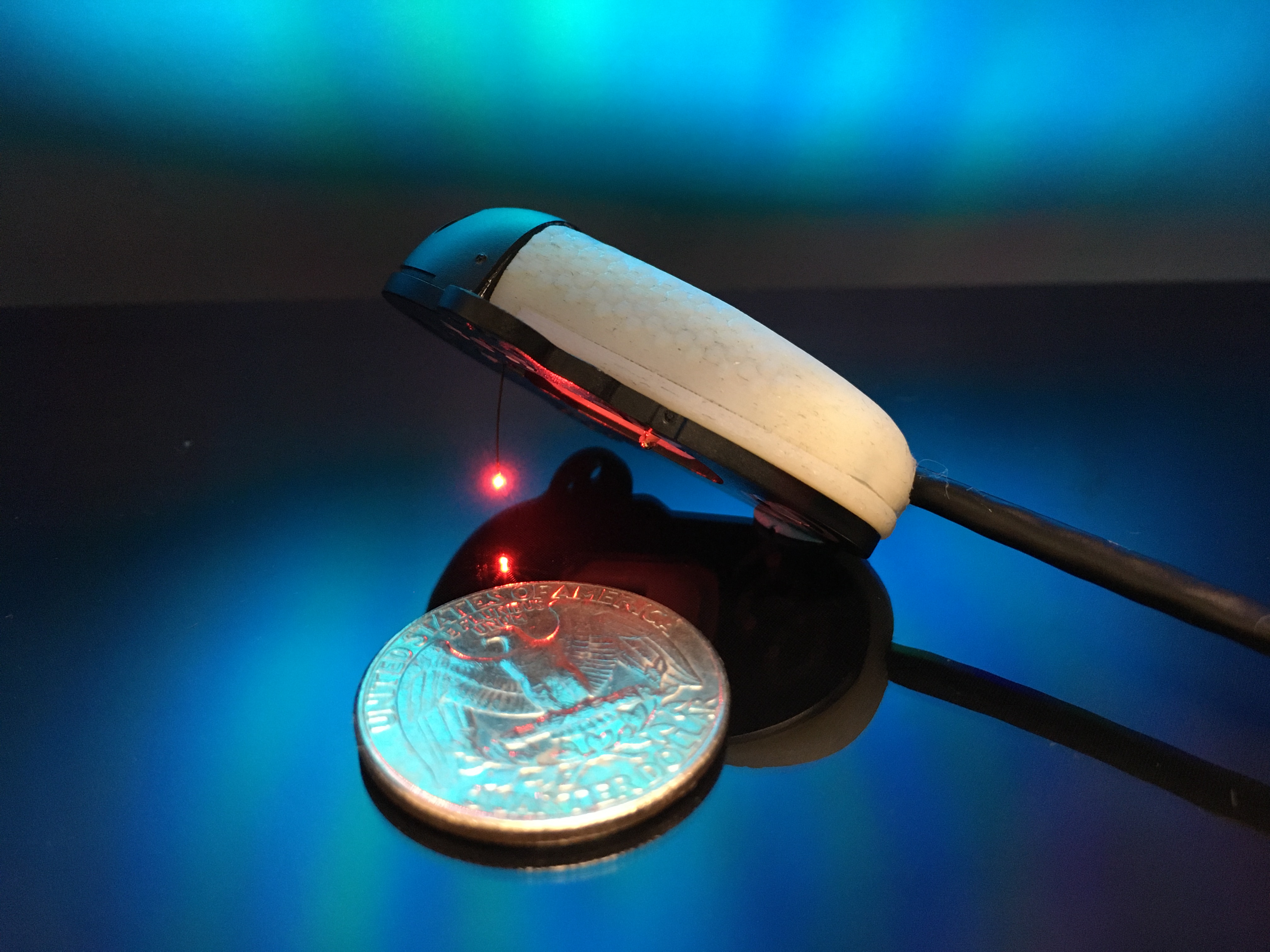 The team is currently expanding the types of chemicals their sensor can monitor. An upcoming project will test how well their wearable sensor simultaneously measures insulin, glucose, lactate, oxygen, and ketone in people with type one diabetes experiencing ketoacidosis (a life-threatening complication of diabetes). Botvinick says the goal is to create a hands-free automated glucose control. “We are going to allow for the kind of automated blood sugar control that has never been achieved before.”
The team is also in talks with partners to start a company to measure lactate and other parameters in intensive care unit patients, says Botvinick, who connects the plan back to their original inspiration. “We want to help people in trauma situations and guide therapy.”